
Home / Commodities / Vanilla
Export commodity
Hand-cured Vanilla planifolia beans from Java, Bali and Papua, graded from gourmet Grade A for culinary use through to extraction-grade beans for flavour houses.
HS 0905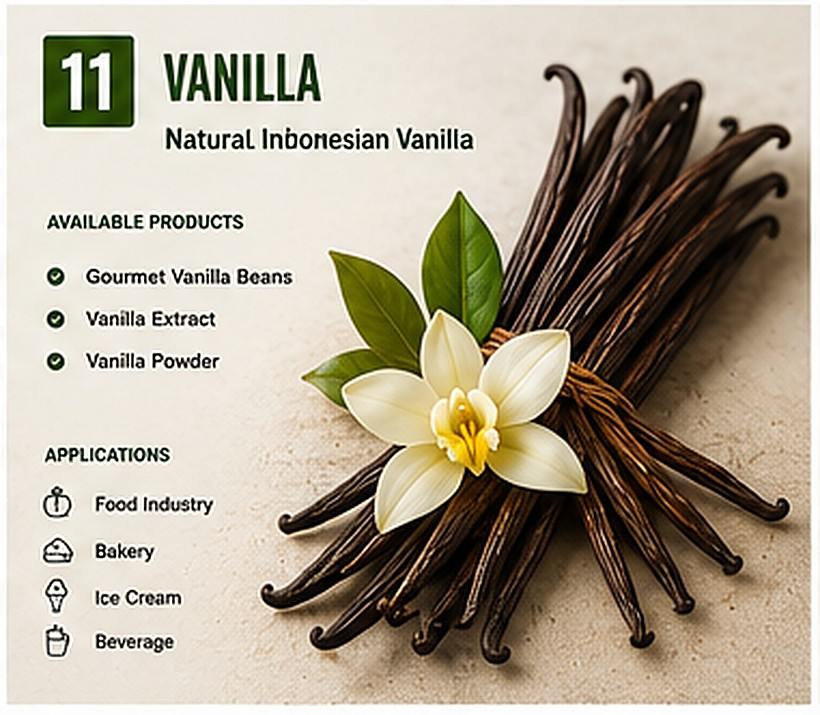
Overview
Indonesia is one of the two largest vanilla producers in the world, and for buyers it usually represents the practical alternative to Madagascar pricing. Indonesian Vanilla planifolia is typically cured to a lower moisture than Bourbon vanilla, which makes it drier and firmer to handle but concentrates the vanillin by weight, and it carries a characteristic smoky, woody depth that many extraction houses actively prefer in a blend. Quality varies widely across the country because curing skill varies, so the only thing that matters commercially is who cured the lot. We buy from established curing houses and grade honestly.
Grades
Whole, supple, oily beans of 14cm and up at 30 to 38% moisture, unsplit. For retail, paste and premium culinary use.
Drier beans at roughly 20 to 25% moisture, including splits and shorter lengths. The economical choice for extract production.
Short cuts and split beans sold by vanillin content rather than appearance, for flavour houses and vanillin extraction.
Where it's grown
Post-harvest
Beans are harvested green and killed by hot-water blanching, then sweated in insulated boxes to start the enzymatic reaction that creates vanillin. They are sun-dried by day and sweated by night over several weeks, then conditioned in closed boxes for months while aroma develops and moisture equalises. The whole cure takes three to six months and cannot be rushed without flattening the flavour. Cured beans are then graded by length, moisture, suppleness and appearance, and bundled.
Season
Vanilla is pollinated by hand and the pod takes eight to nine months to mature, with harvest generally running May to August and curing continuing for months after. New-crop beans typically become available from late in the year, so buyers planning around a specific crop should contract well ahead.
Who buys it
Grade A whole beans for culinary use, vanilla paste and premium extract manufacturing.
Extraction-grade beans and cuts for vanillin and oleoresin extraction houses.
Individually packed whole beans for premium retail, gifting and foodservice.
Packing, shipping & documents
Vanilla is bundled, wrapped in food-grade film and packed into vacuum-sealed foil bags inside cartons, typically 1kg to 5kg per bag, because moisture control in transit is everything with this product. Shipments carry certificate of origin, phytosanitary certificate, packing list, and on request vanillin content and moisture analysis from an accredited laboratory. Given the value per kilo, vanilla is frequently shipped by air freight rather than sea, and we quote both. Samples of 100g to 250g are couriered before contracting.
Questions buyers ask
Gourmet Grade A beans are long, supple and high moisture at 30 to 38%, suited to culinary and retail use. Extraction grade is drier at around 20 to 25%, including splits and shorter cuts, and is sold mainly to flavour houses.
By the traditional blanch, sweat, dry and condition method over three to six months, which is what develops the vanillin and the dark colour. The cure cannot be shortened without flattening flavour.
Yes. Cuts and splits are sold separately from whole beans at a lower price point and are usually traded on vanillin content rather than appearance.
Indonesian beans are generally cured drier, making them firmer to handle with vanillin concentrated by weight, and they carry a smoky woody note that many extractors value in a blend.
Frequently, yes. Given the value per kilo, air freight is often more economical overall than sea freight once financing and transit risk are counted. We quote both.
Let's talk tonnage
Tell us your grade, volume, and destination port. We reply within one business day with an offer, samples, and lead time.
Other commodities