
Home / Commodities / Black & White Pepper
Export commodity
Lampung black pepper, known for high piperine, and Muntok white pepper from Bangka Island. Cleaned and graded whole or ground, with steam sterilisation on request.
HS 0904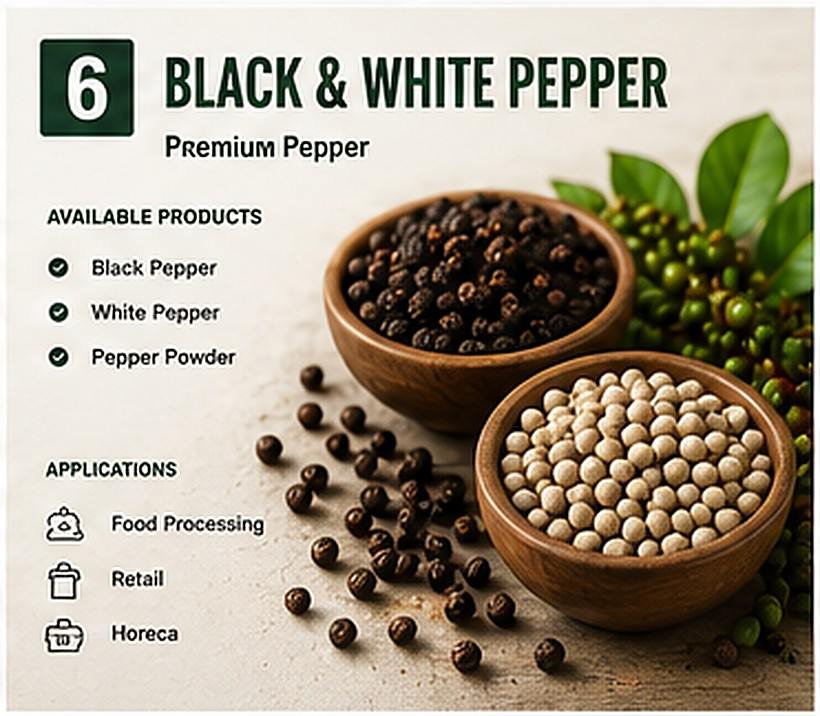
Overview
Indonesia is unusual in the pepper trade because it is a benchmark origin for both colours. Lampung Black Pepper and Muntok White Pepper are recognised trade names in their own right, not just descriptions of where the crop grew. Lampung black is prized for pungency, carrying a piperine level that blenders use to lift a formulation. Muntok white, produced by retting the ripe berry in running water until the skin can be removed, gives the clean pale appearance and milder heat that light-coloured sauces and European charcuterie demand. Both are supplied cleaned, graded by density, and steam-sterilised where your food safety programme requires it.
Grades
Cleaned to ASTA specification with controlled density, moisture and foreign matter. The grade most food manufacturers contract.
Fair average quality, the traditional bulk trading grade at a lower price with wider tolerances.
Retted, cleaned, high-density white pepper with the pale uniform colour that light sauces require.
Milled to your mesh specification from either colour, packed straight after grinding to hold aroma.
Where it's grown
Post-harvest
Black pepper is picked while still green, briefly blanched, then sun-dried on mats until the skin wrinkles and blackens. White pepper takes a different route: ripe berries are retted in running water for a week or more until the outer pericarp softens and can be washed away, leaving the pale inner kernel, which is then dried. After drying both are cleaned across gravity separators and destoners, graded by bulk density, and, where the contract calls for it, steam-sterilised to cut microbial load without the chemistry that many markets now prohibit.
Season
Lampung black pepper is harvested roughly July to September, while Muntok white on Bangka runs a little earlier, around May to August. Post-harvest cleaning and retting add weeks, so realistic shipment planning starts from about six weeks after the harvest window closes.
Who buys it
Whole and ground pepper for seasoning blends, sauces, processed meat and ready meals.
Table-grade whole peppercorns for grinders and retail spice packaging.
Broken grades, light berries and dust supplied for piperine and oleoresin extraction.
Packing, shipping & documents
Pepper is packed in 50kg or 25kg PP woven bags with food-grade liners, and in cartons for ground product going to manufacturers. A 20ft container takes about 18 tonnes. Documentation covers certificate of origin, phytosanitary certificate, weight and quality certificate, packing list, and where contracted, a full ASTA cleanliness analysis plus microbiological results from an accredited laboratory. Steam sterilisation certificates are issued where that treatment is applied. Samples of 250g to 500g are couriered before the contract is closed.
Questions buyers ask
Black pepper is the whole dried unripe berry. White pepper is the ripe berry retted in water so the outer skin can be removed, giving a paler colour and a milder, less pungent heat.
Yes. Steam sterilisation to reduce microbial load is available on request and is commonly specified by food manufacturing buyers whose markets restrict chemical treatment.
Lampung black pepper typically tests at 6% piperine or higher. A certificate of analysis is supplied with each shipment on request.
ASTA is the American Spice Trade Association cleanliness specification covering limits for foreign matter, insect fragments, mould and moisture. Contracting to ASTA gives both sides an objective standard.
Lampung black runs roughly July to September and Muntok white around May to August. Add about six weeks for cleaning, retting and drying before shipment.
Let's talk tonnage
Tell us your grade, volume, and destination port. We reply within one business day with an offer, samples, and lead time.
Other commodities